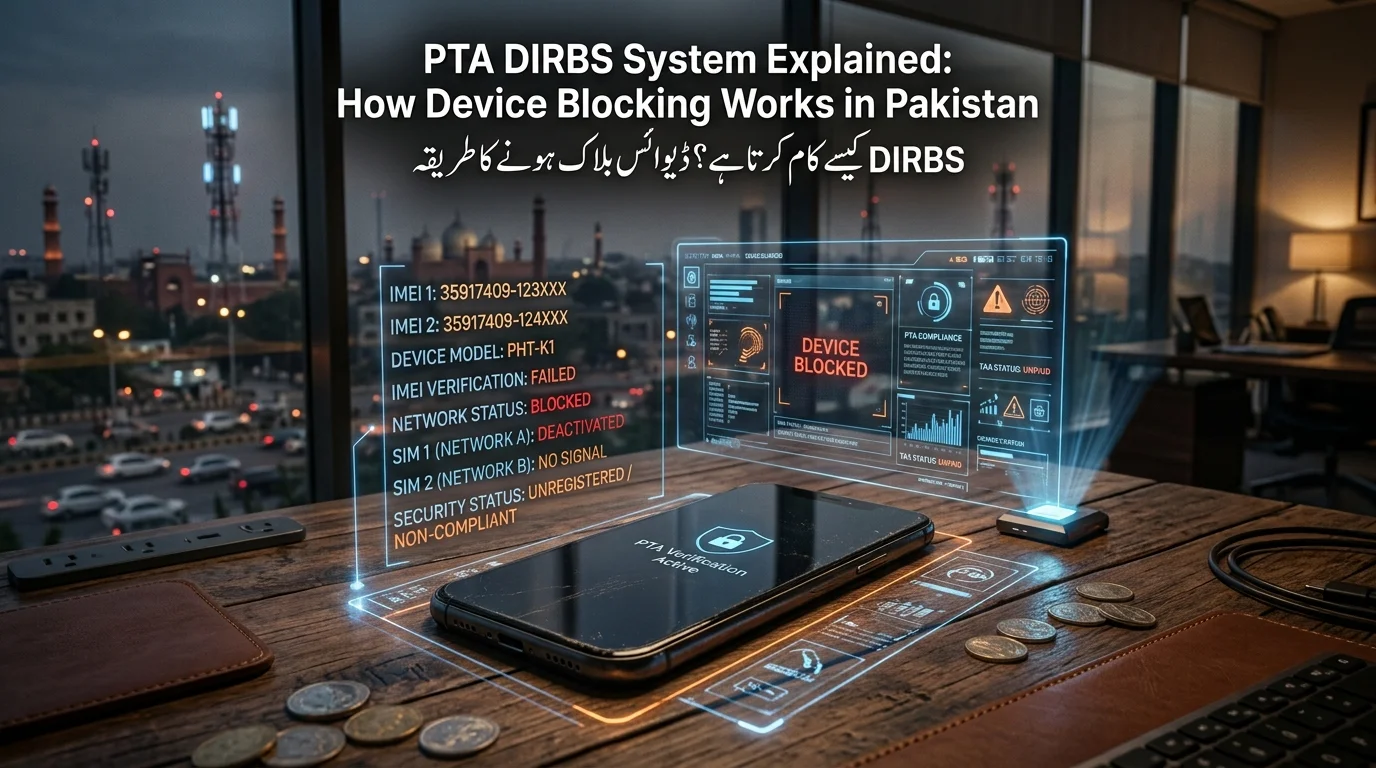
PTA DIRBS System Explained: How Device Blocking Works in Pakistan
DIRBS (Device Identification, Registration and Blocking System) is a system implemented by Pakistan’s PTA to identify and ensure the registration of mobile phones by their IMEI numbers. Launched in December 2018, it targets non-compliant devices, which can be blocked if they fail to meet registration requirements. Issues often arise for phones that stop working with local SIM cards, typically due to unregistered IMEIs or unpaid duties. The guide explains how DIRBS operates, its implications for tourists and overseas Pakistanis, and the steps to take if a device is flagged.
DIRBS (ڈیوائس آئیڈنٹیفیکیشن، رجسٹریشن اور بلاکنگ سسٹم) پاکستان کے PTA کے ذریعے لاگو کیا گیا ایک نظام ہے جو موبائل فونز کی شناخت اور ان کے IMEI نمبروں کے ذریعے رجسٹریشن کو یقینی بناتا ہے۔ دسمبر 2018 میں لانچ کیا گیا، یہ غیر تعمیل کرنے والے آلات کو نشانہ بناتا ہے، جو رجسٹریشن کی ضروریات کو پورا کرنے میں ناکام ہونے کی صورت میں بلاک کیا جا سکتا ہے۔ مسائل اکثر ان فونز کے لیے پیدا ہوتے ہیں جو مقامی سم کارڈز کے ساتھ کام کرنا بند کر دیتے ہیں، عام طور پر غیر رجسٹرڈ IMEIs یا غیر ادا شدہ ڈیوٹی کی وجہ سے۔ گائیڈ میں بتایا گیا ہے کہ DIRBS کیسے کام کرتا ہے، سیاحوں اور بیرون ملک مقیم پاکستانیوں کے لیے اس کے اثرات، اور اگر کسی ڈیوائس کو جھنڈا لگایا گیا ہے تو اس کے لیے اٹھائے جانے والے اقدامات۔
What Is the PTA DIRBS System?
What does DIRBS stand for?
DIRBS has three main functions:
- Device Identification: Each phone is recognized by its unique IMEI.
- Registration: Devices that require formal registration with PTA and clearance through FBR for duties and taxes are processed here.
- Blocking: Devices that do not meet requirements can have their network access denied.
Why was DIRBS introduced?
The system aims to:
- Identify mobile devices on Pakistani networks.
- Differentiate between compliant and non-compliant devices.
- Facilitate formal device registration.
- Enable blocking of non-compliant devices.
- Support regulatory enforcement regarding phone usage in the country.
Read Also: How to Reactivate a Blocked SIM Card in Pakistan
When did DIRBS start in Pakistan?
- 2018: DIRBS was introduced.
- 2019: Expansion of operational procedures, anchored in SRO 50(I)/2019 and SRO 51(I)/2019.
- 2024: Customs General Order 01 of 2024 added further procedural details.
- 2026: Significant technical overhaul of the system is underway.
The FBR’s DIRBS documentation references SRO 50(I)/2019, SRO 51(I)/2019, and Customs General Order 01 of 2024 as the basis for device registration regarding tax and duty.
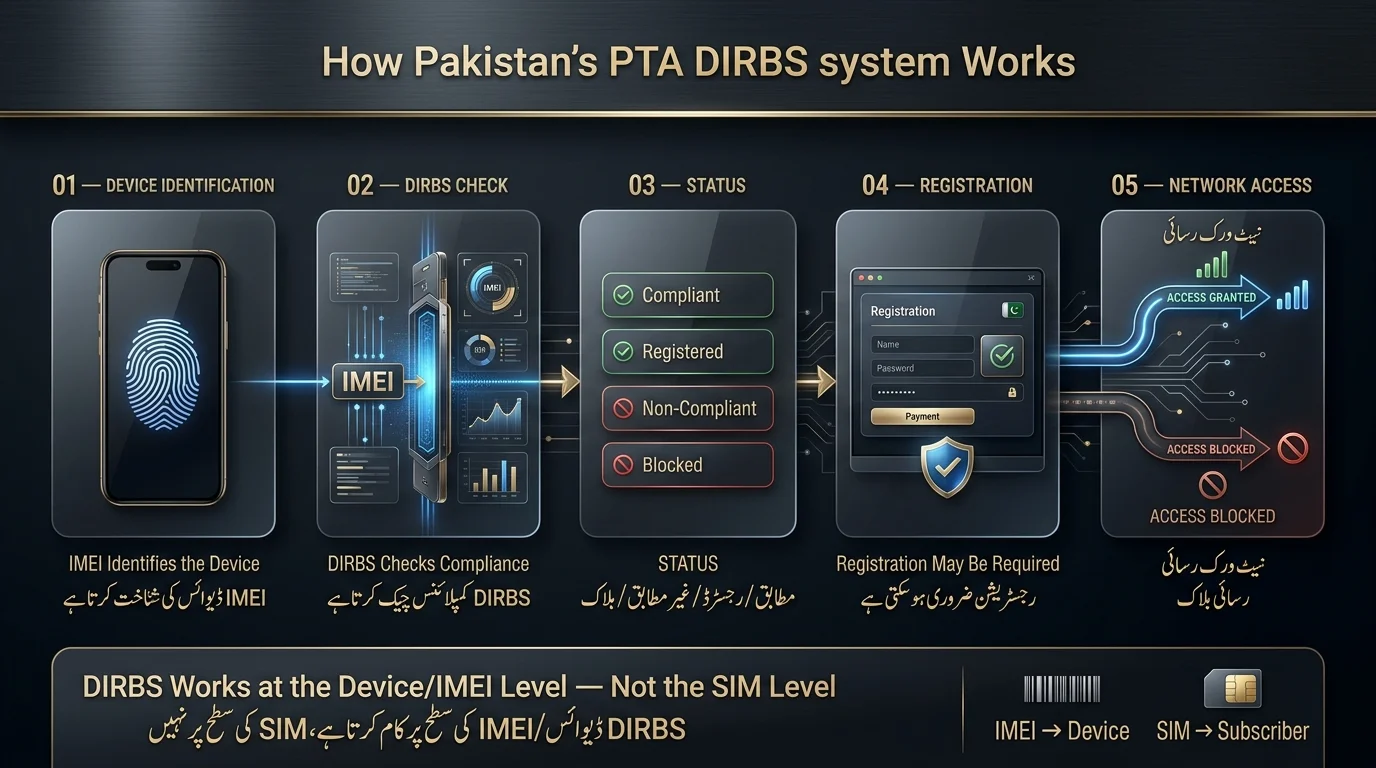
How Does PTA DIRBS Work? Step-by-Step
DIRBS Block a Mobile Phone?
- Connection to Network: When a device uses a local SIM in Pakistan, its identifier becomes visible on the network.
- IMEI Identification: Each device has a unique International Mobile Equipment Identity (IMEI).
- Evaluation by DIRBS: The IMEI is checked against device records to assess compliance status.
- Device Status Categories: Devices are classified as compliant, registered, non-compliant, blocked, or flagged (stolen/blacklisted/invalid).
- User Registration: Registration requirements depend on the device and user circumstances (resident, overseas Pakistani, tourist).
- Blocking of Non-Compliant Devices: Non-compliant devices can be blocked from network access if they fail to comply after the evaluation process.
How Does PTA Identify a Mobile Phone?
- The IMEI (International Mobile Equipment Identity) is a 15-digit number that uniquely identifies a mobile device, similar to a fingerprint.
- You can find your IMEI by dialing *#06#, checking the phone’s Settings under About Phone, looking at the original packaging, or examining the device label.
- DIRBS uses IMEI to track the identity of the device itself, independent of the user, so changing SIMs or phone numbers does not affect compliance status.
- Dual-SIM phones usually have two IMEIs (one for each SIM slot), and it’s important to check the status of both when buying a used device.
How Does DIRBS Check an IMEI?
DIRBS assesses devices based on several criteria related to the IMEI:
- IMEI Validity: The IMEI must be a legitimate and properly formed identifier.
- Stolen-Device Status: IMEIs of stolen devices can be flagged and blocked.
- Duplicate/Problematic IMEI: Cloned or altered IMEIs can cause compliance issues.
- Registration Compliance: A valid IMEI must also go through the necessary registration process if required.
Read Also: How to Block Unauthorized SIM Online in Pakistan
| IMEI/Device Status | Meaning | Possible Result |
| Compliant | Meets applicable requirements | Mobile-network use |
| Registered | Registration completed | Mobile-network use |
| Non-compliant | Action may be required | Notification/restriction/blocking |
| Stolen/blacklisted | Device reported/identified as problematic | Blocking |
| Duplicate/invalid | Identifier issue | Investigation/compliance action |
The text emphasizes that the terminology used to describe system categories is general. It highlights that the specific labels displayed on the official verification channel for your device are the important ones, and cautions against assuming that unofficial status names accurately reflect what the PTA will show.
What Happens When DIRBS Finds a Non-Compliant Phone?
- DIRBS does not block phones immediately; the outcome depends on the device’s status and regulations.
- Users are notified via SMS or official channels if their device requires registration.
- Registration involves generating a Payment Slip ID (PSID) for applicable duties or taxes, as outlined in FBR documentation.
- If the device remains non-compliant after the registration process, it may be blocked from accessing Pakistani cellular networks.
- A blocked device loses access to mobile calls, SMS, cellular data, and any Pakistani mobile network service, but can still connect to Wi-Fi.
Example: An unregistered phone brought into Pakistan will enter compliance; if not registered, it may be blocked from the cellular network, but remain usable over Wi-Fi.
PTA Device Blocking vs SIM Blocking
The text emphasizes that confusing two different issues can lead people to attempt incorrect solutions, such as swapping SIM cards, which is ineffective for resolving an IMEI-level block.
Read Also: SMS to 668: How to Check SIMs Registered on Your CNIC
| PTA/DIRBS Device Blocking | SIM Blocking |
| Associated with device/IMEI compliance | Associated with subscriber/SIM |
| Can affect the device’s mobile-network access | Concerns the SIM/subscriber |
| Changing SIM may not solve an IMEI problem | Replacing SIM addresses a different issue |
| Device remains a physical phone | SIM remains a subscriber identity |
Why Does PTA Block Phones?
- Unregistered/Non-compliant Device: Most common reason for blocking; device was not properly registered.
- Stolen Device: Devices reported as stolen can be flagged and blocked regardless of current usage.
- Duplicate/Cloned IMEI: Tampered or duplicated IMEIs create compliance issues.
- Invalid/Non-standard IMEI: Some devices have identifiers that do not meet standards.
- Failure to Complete Requirements: Registration may be incomplete or payments outstanding.
- Multiple Reasons for Blocking: A blocked phone may not only be due to unpaid PTA tax; it can involve other issues like invalid IMEI or stolen flags.
PTA Tax vs DIRBS: Are They the Same Thing?
DIRBS is the framework for device identification, registration, and IMEI tracking, determining compliance status for mobile devices.
- PTA/Device Registration Payment: This involves the financial aspect, calculating and paying applicable duties and taxes for imported or non-locally purchased devices in coordination with FBR.
- Connection Between DIRBS and PTA: The process flows from device IMEI information to compliance and registration, which may include tax payments, impacting registration outcomes.
- Bringing Phones from Abroad: A foreign device’s IMEI appears in DIRBS when used with a local SIM, but using it long-term without proper registration can cause issues.
- Foreign SIM Roaming: Using a foreign SIM on roaming does not require local registration since it’s not on the local network.
- Local SIM Impact: Inserting a local SIM subjects the device to registration and compliance requirements.
- Temporary Registration for Visitors: Overseas Pakistanis and tourists can register one mobile device for up to 120 days without duties/taxes via the DRS portal; registration must occur within 30 days of arrival for the full duration.
- Grace Period: New non-PTA phones can usually be used without registration for about 60 days. There are different tax rates for passport-based versus CNIC-based registrations.
Recommendation: Always verify current figures and requirements on the official DIRBS/DRS portal, as they are subject to change.
How to Check PTA/IMEI Device Status
- Find your IMEI by dialing *#06# on your device.
- Use PTA’s official channels (DIRBS portal or official SMS) for device verification instead of third-party websites.
- Understand the meanings of status results (compliant, registered, non-compliant, blocked, problematic IMEI).
- If you encounter an unexpected result, contact PTA’s official complaint or support channels for assistance.
What to Do If PTA Blocks Your Phone
- For registration issues, refer to the official DIRBS/DRS portal for procedures.
- For payment issues, verify the government payment process and check for outstanding payments.
- Do not alter the IMEI unofficially; contact official channels instead.
- When buying a used phone, check its IMEI/status beforehand to avoid unresolved compliance issues.
PTA DIRBS in 2026: What Users Should Know
In August 2026, the Pakistan Telecommunication Authority (PTA) announced updates to the DIRBS system following a scheduled downtime in July for system upgrades. Plans for an AI-Powered DIRBS Digital Intelligence System are in development, although details are not yet available. The Federal Board of Revenue (FBR) enforces the current device registration regulations and advises users to check the official DIRBS portal for the latest updates.
Conclusion
DIRBS focuses on identifying mobile devices through their IMEI and determining compliance status for enforcement. It is a device-level system, not SIM-level, currently undergoing technical upgrades by the PTA, including a planned AI-driven overhaul. Before purchasing or importing a phone, check its IMEI/device status and verify the latest PTA/FBR requirements through the DIRBS portal, as authorities regularly update details such as grace periods and fees.
DIRBS اپنے IMEI کے ذریعے موبائل آلات کی شناخت اور نفاذ کے لیے تعمیل کی حیثیت کا تعین کرنے پر توجہ مرکوز کرتا ہے۔ یہ ایک ڈیوائس لیول سسٹم ہے، سم لیول کا نہیں، فی الحال پی ٹی اے کی طرف سے تکنیکی اپ گریڈیشن سے گزر رہا ہے، جس میں ایک منصوبہ بند AI سے چلنے والی اوور ہال بھی شامل ہے۔ فون خریدنے یا درآمد کرنے سے پہلے، اس کا IMEI/ڈیوائس اسٹیٹس چیک کریں اور DIRBS پورٹل کے ذریعے PTA/FBR کے تازہ ترین تقاضوں کی تصدیق کریں، کیونکہ حکام باقاعدگی سے رعایتی مدت اور فیس جیسی تفصیلات کو اپ ڈیٹ کرتے ہیں۔
FAQ’s
What is PTA DIRBS?
DIRBS (Device Identification, Registration and Blocking System) is PTA’s framework for identifying mobile devices by IMEI, checking their compliance status, and blocking non-compliant devices from Pakistani mobile networks.
What does DIRBS stand for?
Device Identification, Registration and Blocking System — a system built to identify devices, register them where required, and block those that don’t comply.
How can I check my IMEI?
Dial *#06# on your phone, or check Settings > About Phone. It also usually appears on the original box or device label.
What happens if my phone is non-compliant?
You may be notified of required action, generally registration and, where applicable, payment of duties/taxes. If users do not complete the process, the authorities can eventually block the device from accessing local mobile networks.
Can a PTA-blocked phone use Wi-Fi?
Generally yes — the block affects mobile-network access (calls, SMS, cellular data), not Wi-Fi connectivity, since Wi-Fi doesn’t go through the cellular network DIRBS monitors.
Why does PTA block an IMEI?
Common reasons include an unregistered/non-compliant device, a stolen-device report, a duplicate or cloned IMEI, an invalid IMEI, or an incomplete registration/payment process.
Disclaimer
The article provides general information about PTA DIRBS, IMEI registration, device blocking, and related procedures. It emphasizes that rules and requirements may change and advises readers to verify their device’s IMEI status and compliance with PTA and FBR guidelines before taking action. The content is not legal or regulatory advice, and the authors are not liable for any consequences from relying on outdated information. It warns against attempting to alter a device’s IMEI through unofficial methods and suggests contacting official authorities for disputes.
Sources & References
- FBR and DIRBS: The Federal Board of Revenue (FBR) launched the Device Identification Registration and Blocking System (DIRBS) on December 1, 2018, to block non-compliant mobile devices. It references SRO 50(I)/2019, SRO 51(I)/2019, and Customs General Order 01 of 2024.
- Active SROs: SROs 50 and 51(I)/2019 support DIRBS implementation.
- DIRBS FAQs: FBR FAQs provide details on device registration, local SIM usage, the 60-day registration period, and penalties for non-registration.
- PTA Complaints: The PTA includes DIRBS-related complaints in its mobile device registration documentation, outlining investigation procedures.